← All projects
BACHELOR THESIS · INTERACTION DESIGN

From “reduce food waste” to something households could actually use

Hamle started as a broad bachelor brief from Smart Gjøvik: develop a digital solution that could help households reduce food waste. I worked as the interaction designer in a team with two web developers, leading the research and design work while we developed the product together.

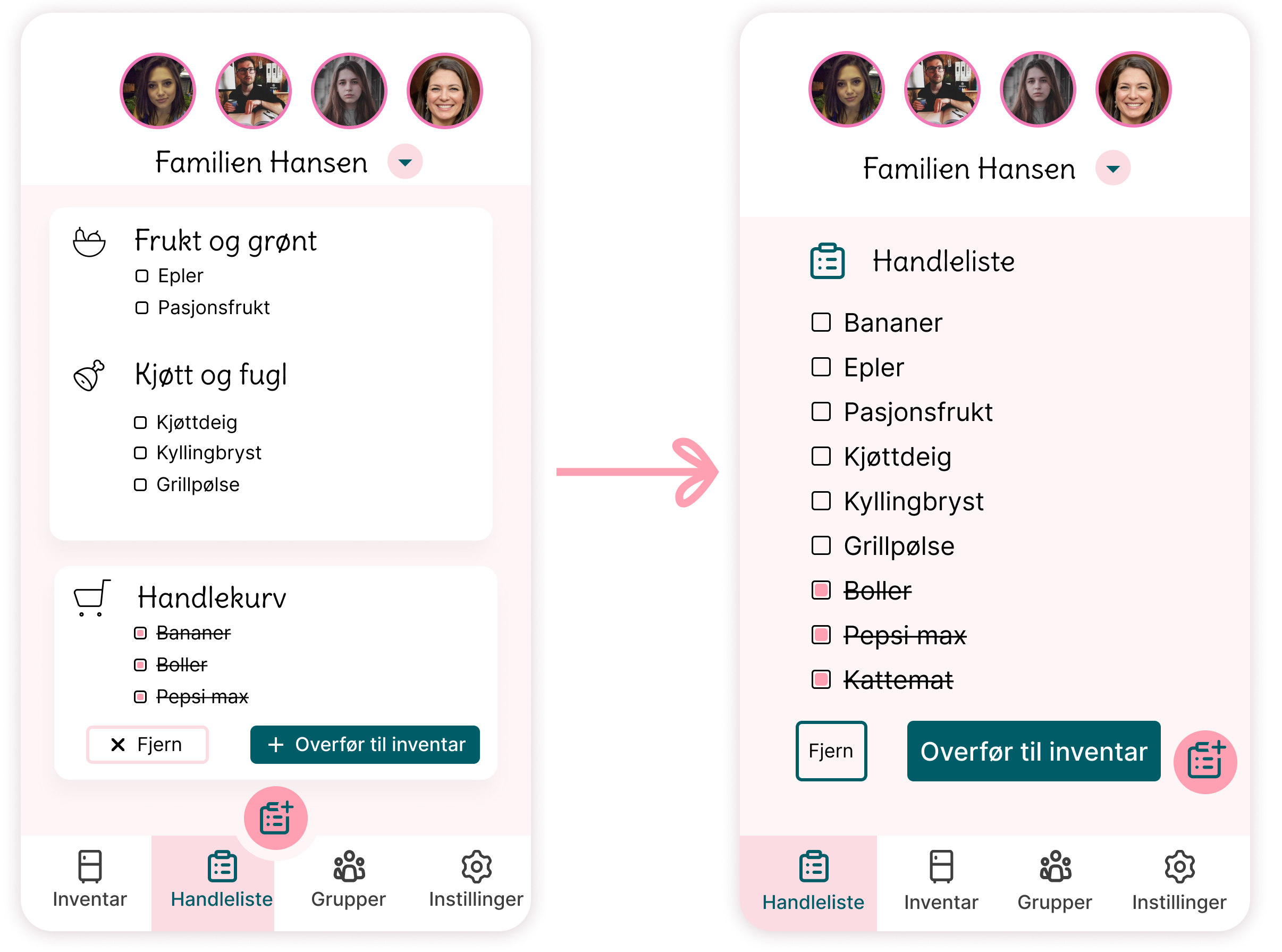
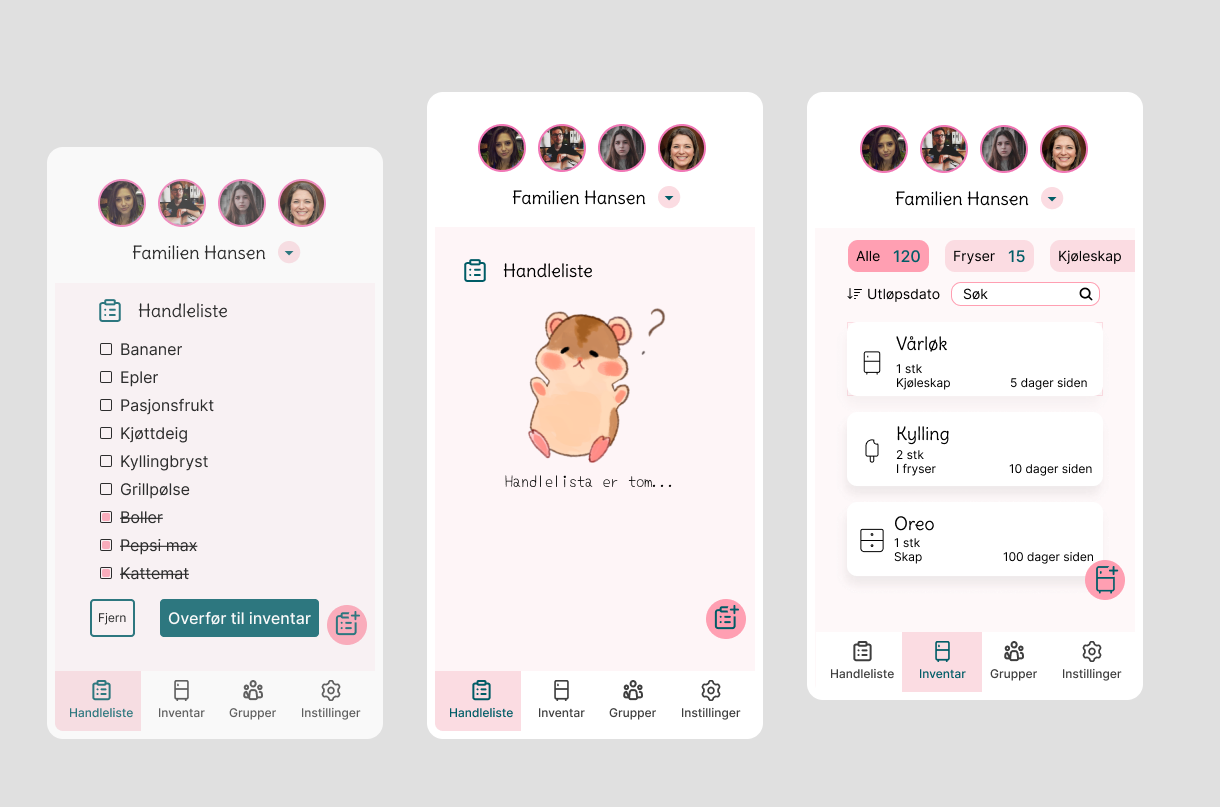
Hamle shopping list and household inventory screens
Date
January–May 2022
Role
Interaction designer
Work
Research, interaction design and prototyping
Status
Working PWA and one-week pilot
01 / Research

People didn’t necessarily think they had a problem

We started with a survey of 580 people and four semi-structured interviews to understand how households planned shopping, stored food and thought about waste.

The gap between how people described themselves and what actually happened stood out. Interview participants generally felt they had good control over their groceries, but still talked about small mistakes: food forgotten in the fridge, extra trips to the store, or buying something again because no one remembered it was already at home.

The survey pointed in a similar direction. Food sitting too long in the fridge was the most common reason people gave for throwing things away, while shopping lists and checking what was already at home were already common habits.

580 survey responses 4 interviews
Perceived control People generally felt they had good control over their groceries
Observed behaviours
  • Food forgotten in the fridge
  • Extra trips to the store
  • Buying something already at home
Research and interview synthesis
02 / Concept

The concept became a bridge between shopping and storage

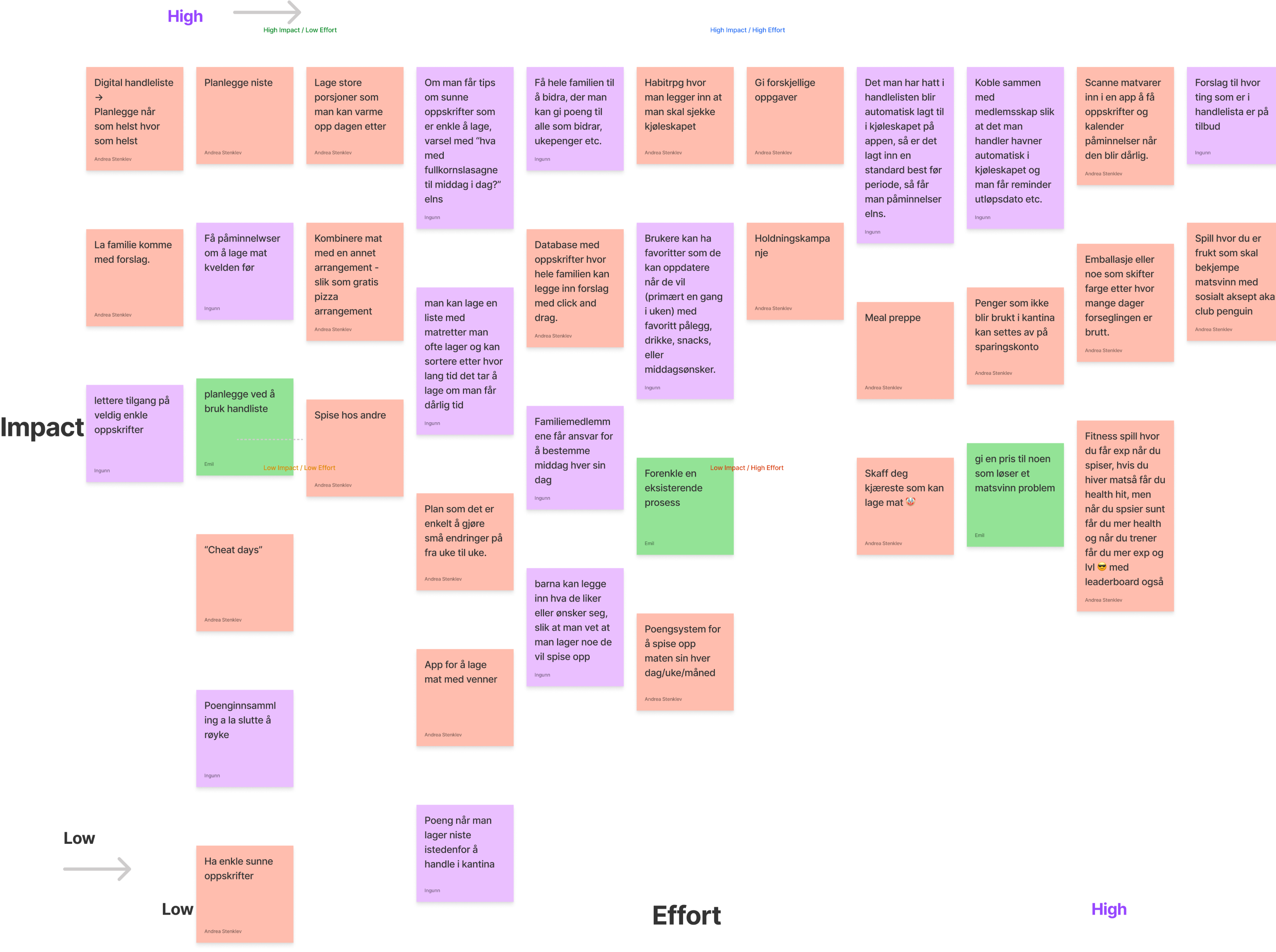
Rather than trying to solve food waste directly, we focused on making planning and overview easier.

We narrowed Hamle down to two main functions: a shared shopping list and an overview of the food already at home. The idea was that they should work together. After a shopping trip, items could move from the list into the household inventory, giving everyone in the household the same overview and making duplicate purchases less likely.

We explored other ideas too, including profiles and food preferences, but they stayed secondary to the shopping list and inventory.

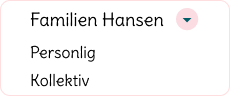
Shared shopping list What the household needed to buy
Hamle selector for personal and shared shopping lists
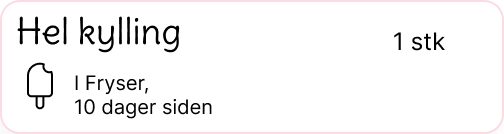
Household inventory What the household already had
Hamle inventory item with quantity and days since purchase

One shared overview connected shopping decisions with food already at home.

03 / Prototype testing

The first prototypes exposed some wrong assumptions

We tested an early low-fidelity prototype with four participants, made changes, then tested the revised version with a fifth. Later, five more participants tested a higher-fidelity prototype.

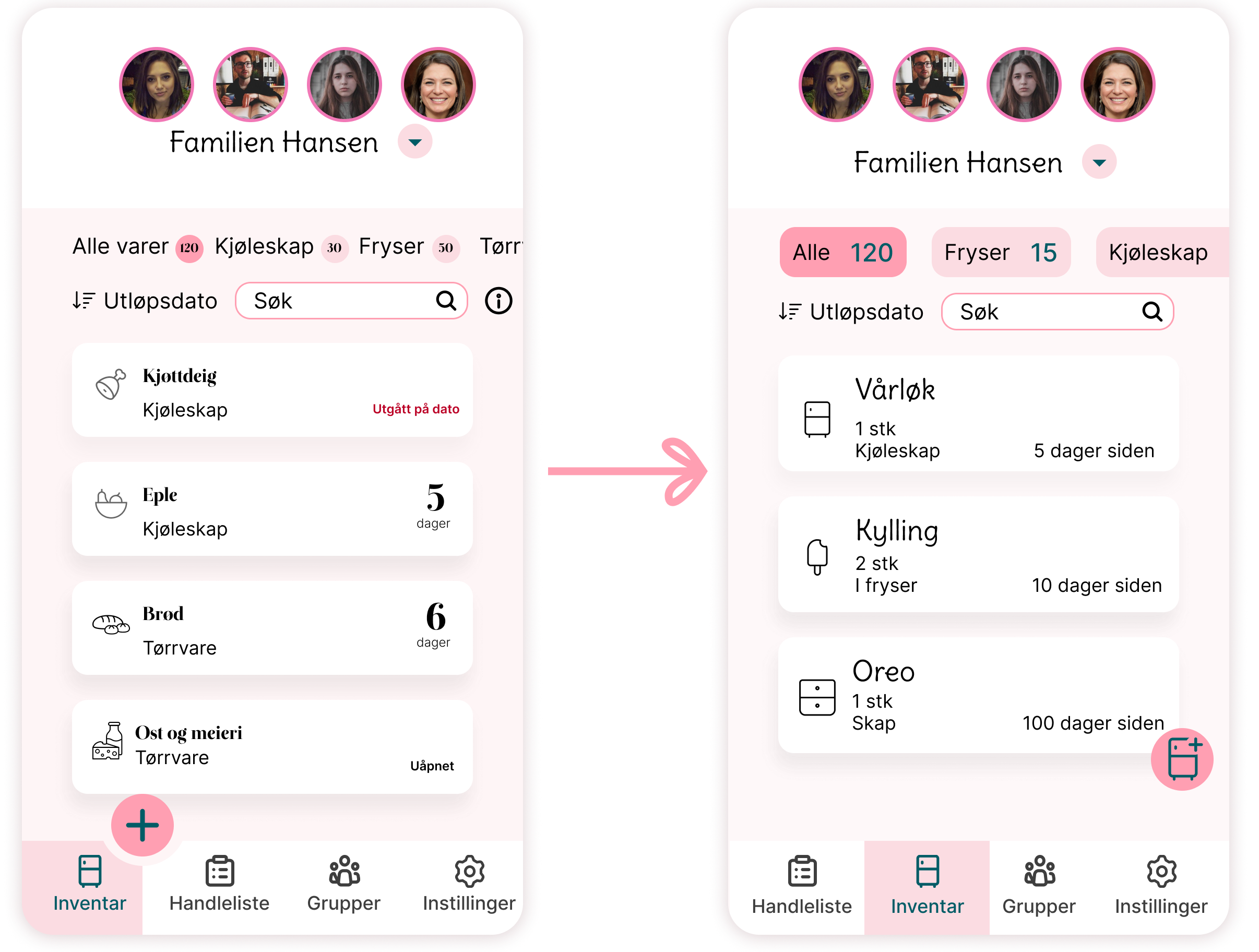
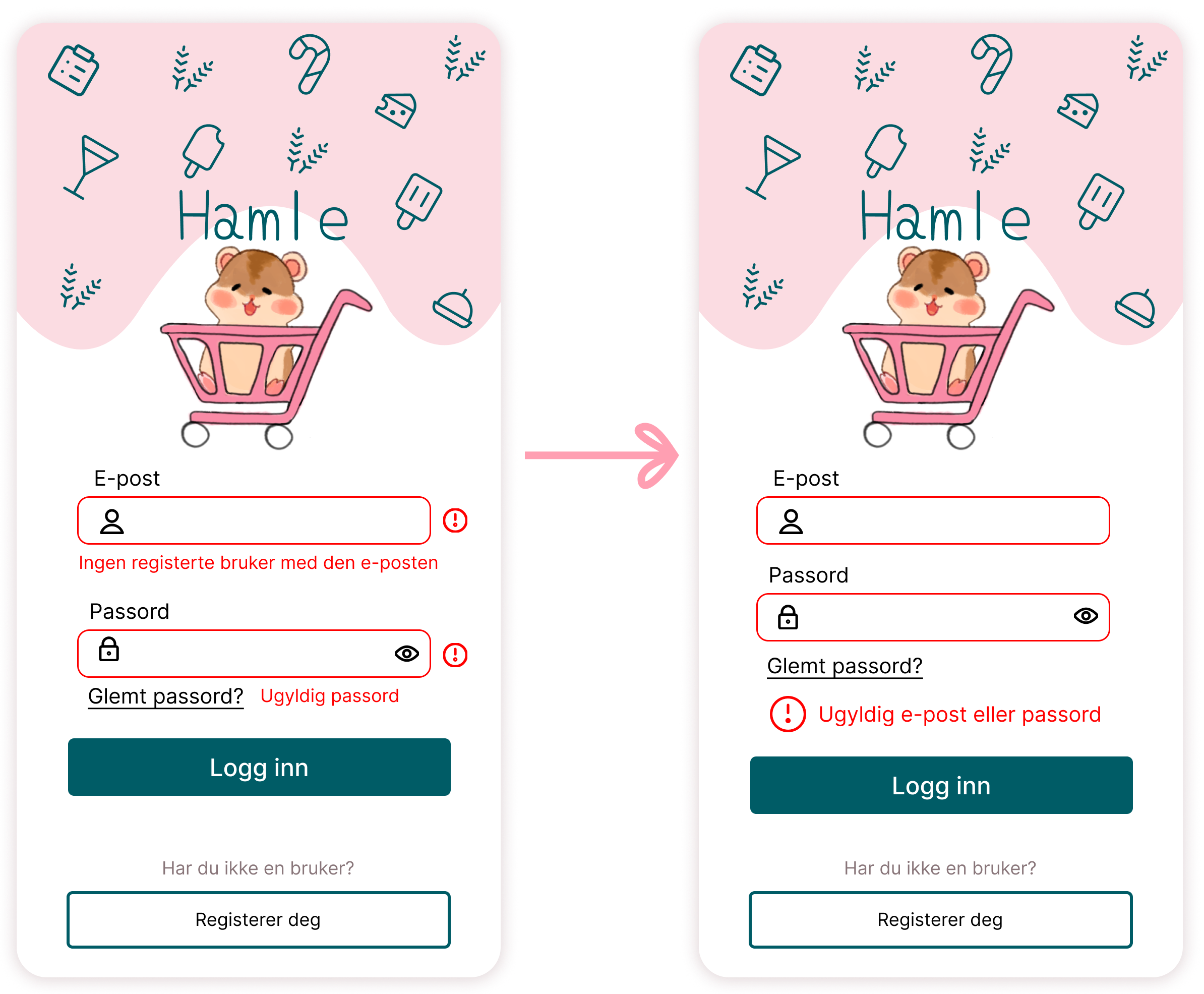
The tests surfaced a few very concrete problems. People mixed up the inventory and shopping list, the shopping-cart interaction was unclear, groups were harder to find than we expected, and people read the number of days in the inventory as time until expiry rather than time since purchase.

These findings gave us concrete things to fix rather than just a general sense of whether people liked the app.

Inventory iteration
Inventory iteration
04 / A test limitation

Not every test finding deserved the same weight

Tested category grouping

One result I still think is worth questioning was the reaction to grouping shopping-list items by category.

Participants did not immediately see much value in it, and the categories were removed in the next iteration. But the test happened in a school cafeteria, not while people were actually grocery shopping. The grouping was meant to make it easier to move through a store, so I do not think the test really told us whether that idea was useful in context.

We still simplified the flow where people were clearly getting stuck, but I would not treat the category question as fully resolved.

05 / Building the product

Design and development moved in parallel

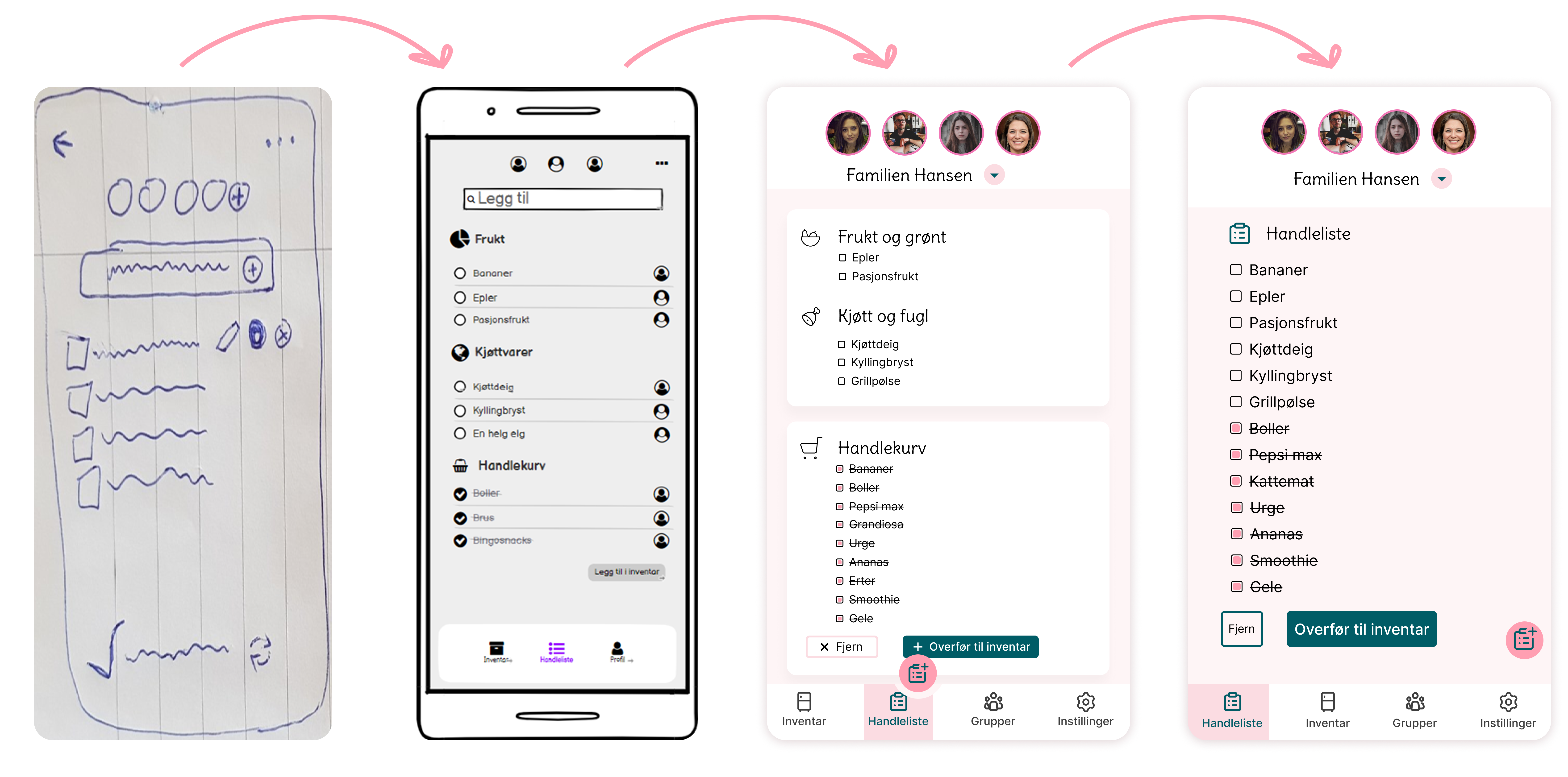
The project did not have a clean handoff from design to development. While I worked on the research, interaction design and UI, the developers were building the product in parallel, and we adjusted things as both the design and the code evolved.

Hamle eventually became a working PWA built in React with Firebase and Netlify. Working this way meant making design decisions within the constraints of something that actually had to be built in a short bachelor timeline.

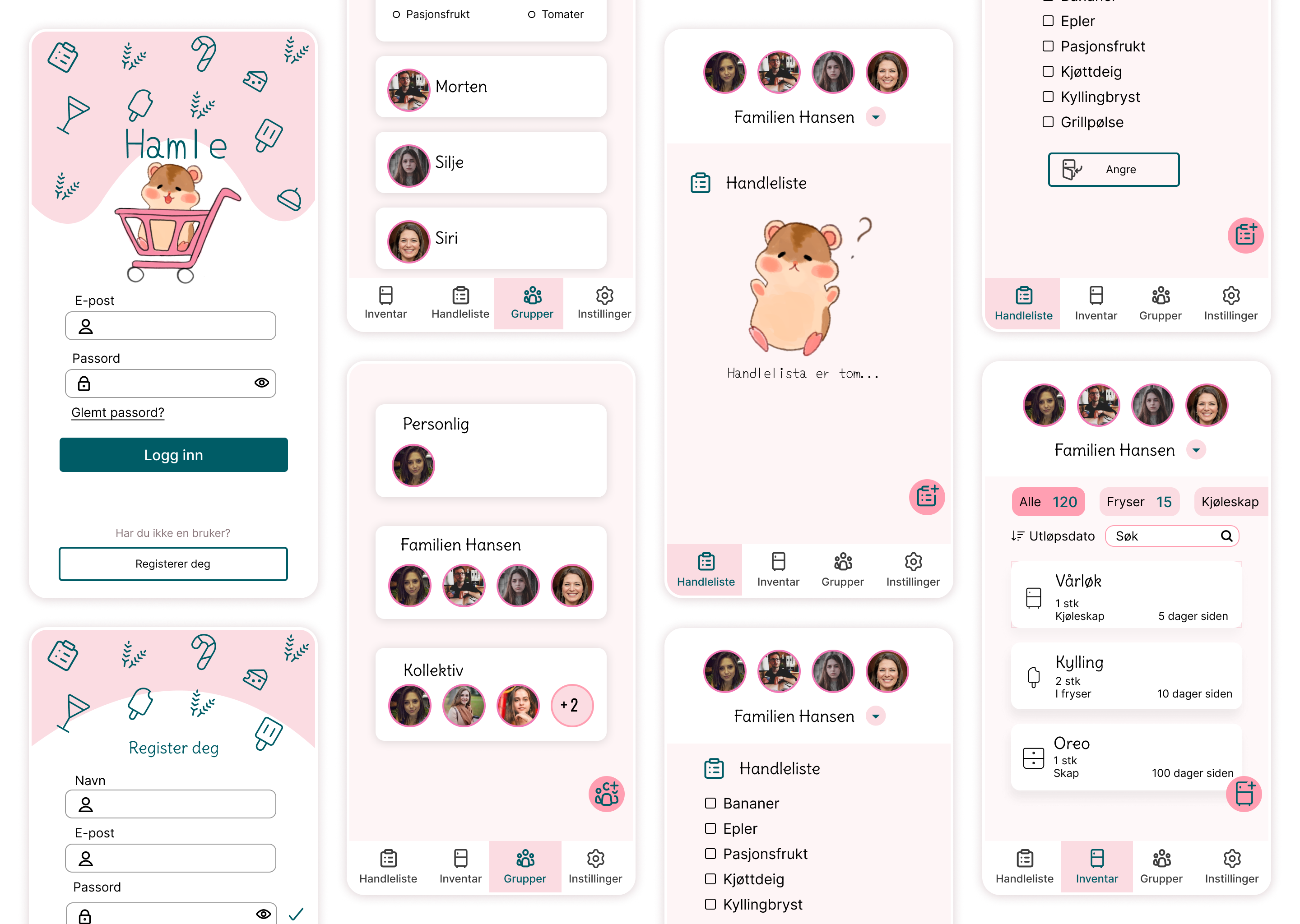
Design progression from paper sketch to finished screen
06 / Pilot

The pilot answered a smaller question than the original brief

We piloted the finished MVP with eight participants for one week. The shared shopping list and inventory were the features people mentioned most often as useful, and participants reported somewhat better control over what they needed to buy.

A week was too short to show whether Hamle reduced food waste. The pilot suggested that the shared overview was useful, but whether that translated into less waste would have needed a much longer test.

8 participants1 week
What it could tell us

The shared shopping list and inventory were mentioned most often as useful.

Participants reported somewhat better control over what they needed to buy.

What it couldn’t tell us

Whether Hamle reduced household food waste.

A longer test would have been needed to investigate that outcome.

Finished Hamle UI overview
NEXT PROJECTModia ↗